team

Meet the Team Behind FireCoatings

Our team combines protective-coating experience, project coordination, health-and-safety management and practical site delivery. Each person works within a defined role to support controlled application and clear project communication.
People & Roles

The People Delivering Our Projects

Our management, project and application teams work together from initial review through mobilisation, coating application and handover. Responsibilities are assigned according to the project scope, competence and supervision arrangements.
Request Quote
Myles Howson
Managing Director

Leads FireCoatings’ commercial direction, client relationships and technical review process. Myles draws on extensive protective coatings experience to help define practical application scopes from the project information provided.

Harry Prest
Operations & Quality Director

Coordinates labour, equipment, programmes and site delivery across FireCoatings projects. Harry also supports application checks, QA records and the preparation of project handover information.

Paul Howson
Health, Safety & Environmental Manager

Oversees company health-and-safety arrangements and supports project planning, RAMS, COSHH controls and site coordination. Jay works with project teams to apply suitable controls to each work scope.

Scott Carruthers
Project Manager

Coordinates project information, surveys, mobilisation and day-to-day communication. Scott helps keep the agreed scope, programme, site interfaces and application requirements aligned throughout delivery.

Wesley Patterson
Intumescent Coating Applicator

Carries out structural-steel preparation and intumescent coating application under the agreed method and supervision arrangements, including in-process coating checks and care of application equipment.

Robert Flack
Intumescent Coating Applicator

Supports the preparation and application of intumescent coating systems on site, working to the project RAMS, product instructions and defined application and quality-control process.

How the Team Operates

How Our Team Delivers the Work

Our team works within defined management, application and inspection arrangements. Responsibilities are established before mobilisation and coordinated with the client and wider site team throughout the works.

Project Information & Technical Review

We review the accepted fire-resistance requirements, member information, selected system documentation and practical site constraints relevant to our scope. Missing or conflicting information is raised with the appropriate project party.

Controlled Application & Process Checks

Coatings are applied by suitably trained operatives using the method permitted for the selected product. Relevant site conditions and WFT readings are recorded during the agreed application scope.

Quality Records & Handover

Application and inspection records are compiled for the defined FireCoatings scope. These may support project-team and building-control review but do not replace fire design or regulatory approval.

Construction worker wearing a yellow safety vest, gloves, and respirator inspecting a newly painted black steel support column inside a building under renovation.
Accountability & Assurance

Defined Responsibility on Every Project

Our work is managed through assigned responsibilities, project-specific RAMS, supervision and agreed quality records. This creates a clear record of decisions, checks and work completed within our scope.
Two workers in safety harnesses and high-visibility vests indoors, one adjusting the other's harness lanyard while a third worker walks inside a warehouse.
Careers

Build Your Career With FireCoatings

We welcome enquiries from experienced coating operatives and people looking to develop within specialist structural-steel preparation and intumescent application. Available training and development depend on the role and individual development plan.
View Current Opportunities
FAQ

Common Questions About Our Team

This section answers the questions we’re most often asked about our people, training and site accountability. Fire protection is only as reliable as the team delivering it, so we place strong emphasis on competence, supervision and clearly defined responsibility on every project.
Who carries responsibility for compliance on site?

Responsibility is shared across the relevant clients, designers, contractors and dutyholders. FireCoatings is responsible for planning, managing and recording the work within its agreed scope and for raising issues that affect that work.

Are your operatives trained specifically for intumescent coatings?

Operatives are assigned according to their training, experience and the supervision required for the task. Project briefings cover the selected product, application method, WFT targets, site controls and relevant QA requirements.

What qualifications does your team hold?

Qualifications vary by person and role and may include relevant CSCS cards, IPAF categories, NVQs, SSSTS or SMSTS and health-and-safety qualifications. Current evidence is checked when a qualification is required for the assigned work.

How do you ensure consistency across different sites and teams?

Projects use defined scopes, product information, RAMS, briefings, supervision and agreed application records. These controls are adapted to the conditions and requirements of each site.

Who carries out WFT monitoring and quality checks?

WFT readings and in-process checks are completed by personnel assigned to the application or inspection activity. Responsibilities and record requirements are defined through the project QA arrangements.

How is supervision maintained on live construction sites?

Supervision is planned according to the project risk, team, programme and work activities. Supervisors coordinate sequencing, site rules, access, other trades and matters affecting the application scope.

Do you use subcontract labour or directly managed teams?

The employment status of personnel may vary by project. Anyone working within our scope is subject to the relevant competence checks, RAMS, briefings, supervision and quality arrangements.

How do you manage training and ongoing competence?

Competence is considered through qualifications, training, experience, task knowledge and observed performance. Refresher training and development are arranged according to role and need.

How do you ensure operatives understand project-specific requirements?

Before relevant work begins, the team is briefed on the project scope, RAMS, system information, work areas, application targets, sequencing and individual responsibilities.

What happens if issues are identified during works?

The affected work is reviewed and, where appropriate, paused or isolated. The issue is recorded, referred to the responsible project party and addressed through agreed corrective action and further inspection where required.

Graco 695 XT airless sprayer with a yellow bucket in an unfinished industrial interior with metal framing and construction equipment.
Hand in black glove holding a blue infrared thermometer showing 20.1°C and a black temperature and humidity meter showing 18.5°C, 73.2% relative humidity, and 13.6°C dew point.
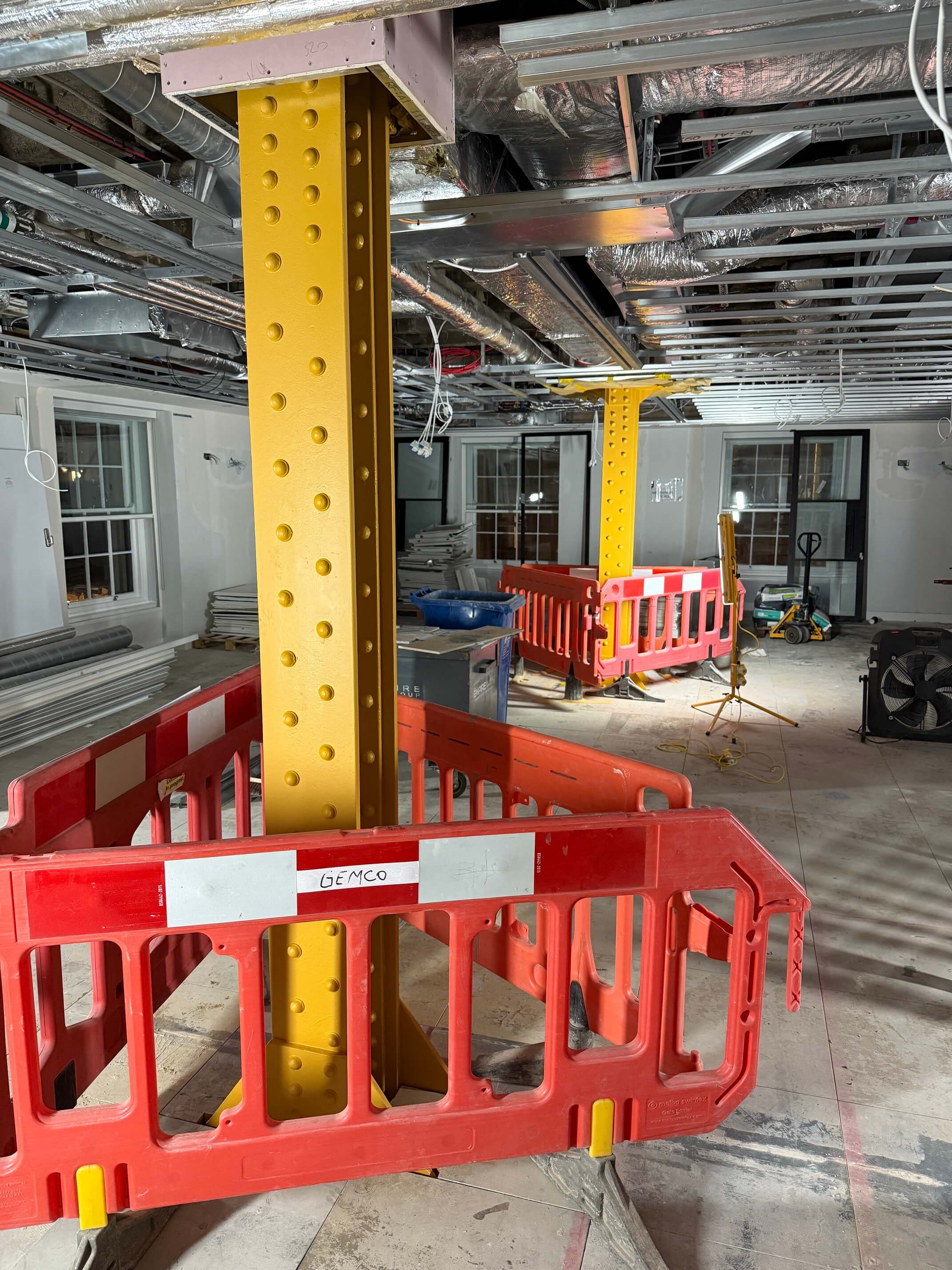
Interior construction site with yellow steel support beams surrounded by red safety barriers and exposed ceiling ducts and wiring.
Selected Projects

Selected Structural-Steel Projects

Examples of intumescent application across commercial, refurbishment and live working environments.
Client Feedback
"Thank you Myles and team for all your hard work on this one. It wasn't easy working around the schedule but you got it done without causing any further issues. It was a pleasure to work with you."
Chris
Project Manager, Millcroft Services
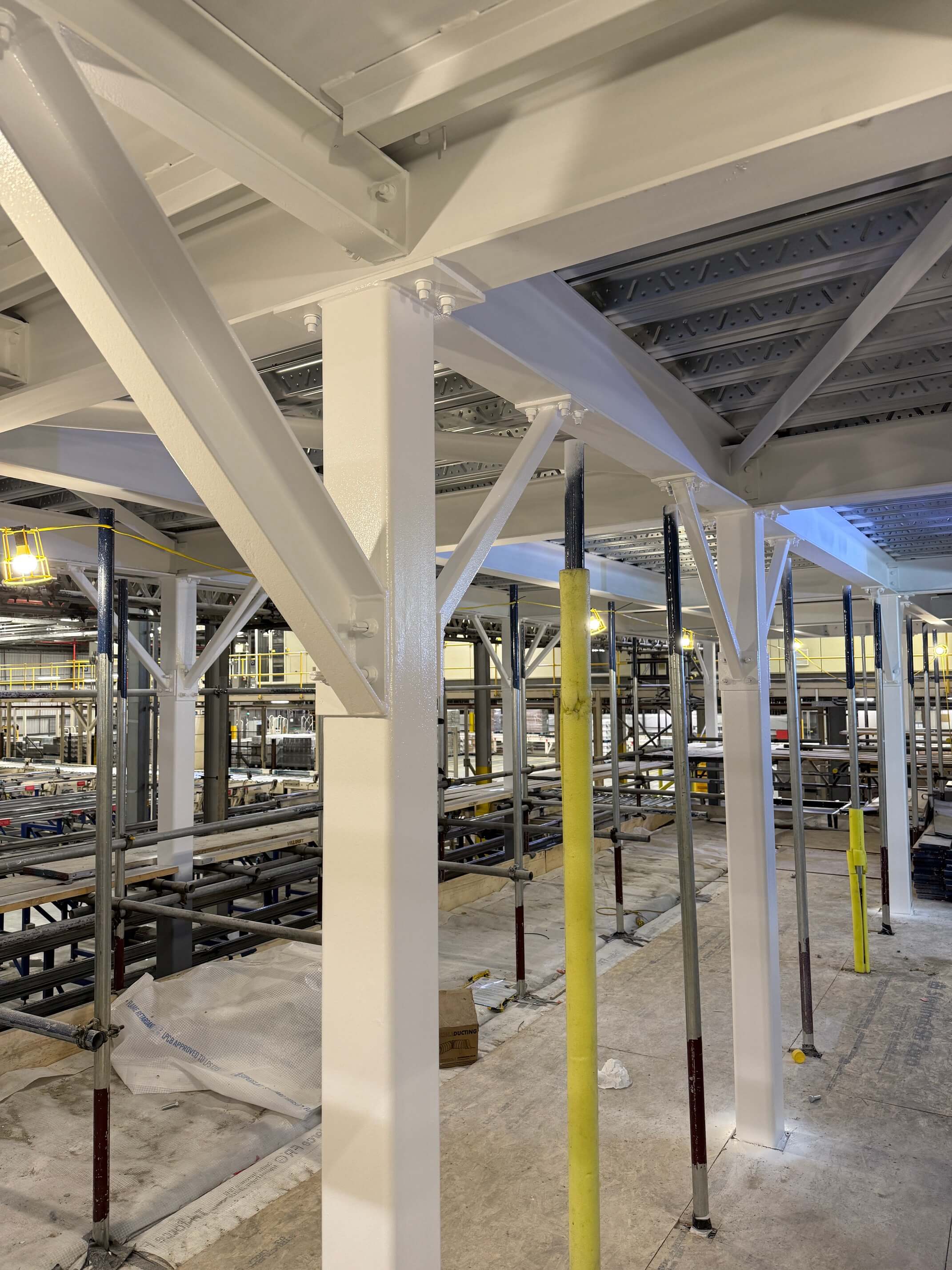
Interior of a construction site with white-painted steel beams and yellow support poles.
Client Feedback
"NuColour worked efficiently around our programme and delivered on time at late notice. The team were organised, flexible, and professional throughout the works."
Ciprian
Site Manager, Principal Contractor – GEMCO
Close-up of a bright yellow structural steel column with rivets installed on a construction site indoors.