Essential terminology for fire protection and compliance.
The bond between a coating and the surface beneath it. Preparation, compatibility, application and exposure conditions can all affect adhesion.
Government guidance on ways of meeting the fire-safety requirements of the Building Regulations in common situations in England. It does not itself set every project requirement or guarantee compliance.
Technical definitions supporting specification and compliance.
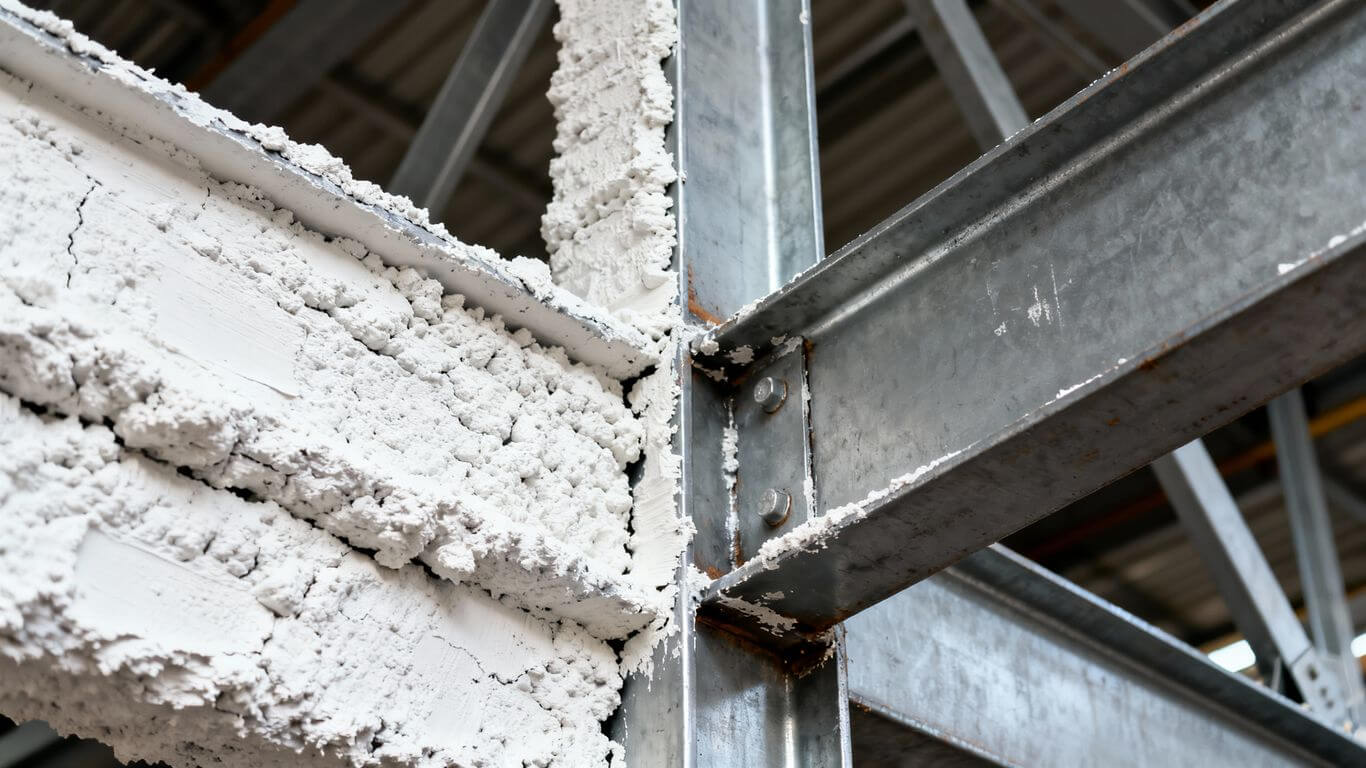
The expanded insulating layer formed when an intumescent coating reacts to heat. The char slows heat transfer to the protected steel.

The suitability of primers, intumescent coatings, topcoats and existing substrates for use together as a documented system.
The design temperature at which a particular structural member is assessed as reaching its limiting load-bearing condition. It must come from the accepted structural fire design.
The ability of a coating system to reduce corrosion of the steel in its intended exposure environment. Intumescent protection and corrosion protection are related but separate considerations.
The temperature at which moisture can condense from the air. Coating application normally requires a suitable margin between steel temperature and dew point, as stated in the product data.
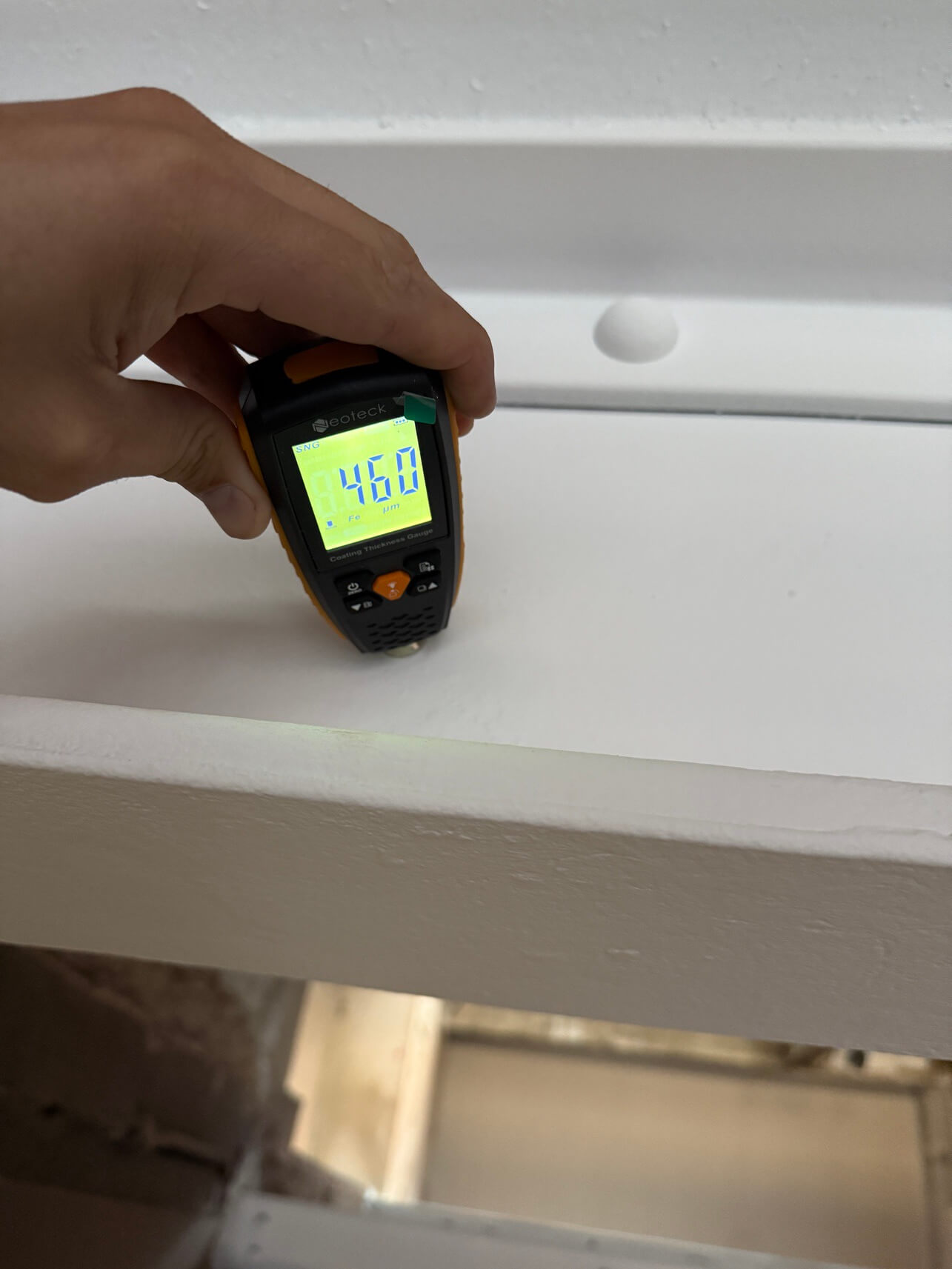
The thickness of a coating after it has dried sufficiently for inspection. For intumescent coatings, the required DFT is taken from the accepted member-specific schedule and system data.
Core definitions for fire protection systems.
A fire-protection method that encloses a structural member using a tested board, spray or other protective system.
An informal term commonly used for a stated period or classification of fire resistance. The relevant performance criteria and test or assessment basis must also be identified.
The range of materials, member types, dimensions, exposure arrangements and other conditions covered by the relevant test or assessment evidence.
Technical definitions supporting specification and compliance. Navigate between sections using the tabs below.
The movement of thermal energy by conduction, convection or radiation. Intumescent char helps reduce the rate at which heat reaches the steel.
A description of resistance to heat transfer. Structural-steel intumescent coatings are generally selected to support load-bearing fire resistance; this should not automatically be described as an insulation classification.
A reaction in which a material expands when exposed to heat, forming a protective char.
The agreed inspection stages, methods, acceptance criteria, responsibilities and records for a particular work scope.
The ability of a coating system to withstand a defined level of mechanical impact without unacceptable damage.
Coating work carried out in manufacturing, processing or industrial environments, often requiring additional controls for access, operations and exposure conditions.
Essential terminology for fire protection and compliance.

The ability of a structural element to support its applied load. Steel’s load-bearing performance reduces as its temperature rises.

The agreed method used to identify members, take readings, record results and compare them with the applicable schedule or acceptance criteria.
One thousandth of a millimetre, written as µm. WFT and DFT are commonly recorded in microns.
An oxide layer formed on hot-rolled steel. Whether it must be removed depends on its condition, the preparation requirement and the selected coating system.

Built-in measures intended to resist fire or limit its effects without needing manual activation. Examples include intumescent coatings, fire-protection boards and compartmentation.
A coating applied to prepared steel to provide adhesion and, where required, corrosion protection. It must be compatible with the complete intumescent system.
Technical definitions supporting specification and compliance. Navigate between sections using the tabs below.
A measure of a steel member’s heated perimeter relative to its cross-sectional area, commonly expressed as Hp/A or Am/V. It influences how quickly the member heats and the required protection thickness.
The shape and dimensions of a structural-steel member, such as a universal beam, column or hollow section.
Cleaning or treatment carried out to make a substrate suitable for the selected coating system. The required method depends on condition, contamination and system requirements.
The project information defining the accepted primer, intumescent coating, optional topcoat, required thicknesses, preparation, exposure and application requirements.
A compatible finishing coat used where required for appearance or environmental protection. Not every system or exposure requires the same topcoat.
A measure of how readily heat passes through a material. Lower conductivity generally means slower conductive heat transfer.
Records connecting products or batches with dates, work areas and other application information within the agreed project scope.
The thickness of a coating immediately after application. It is used as an in-process control before the coating dries to its final DFT.












.png)