Mechanical Abrasion for Fire Protection

Precision Surface Preparation for Sound Structural Steel

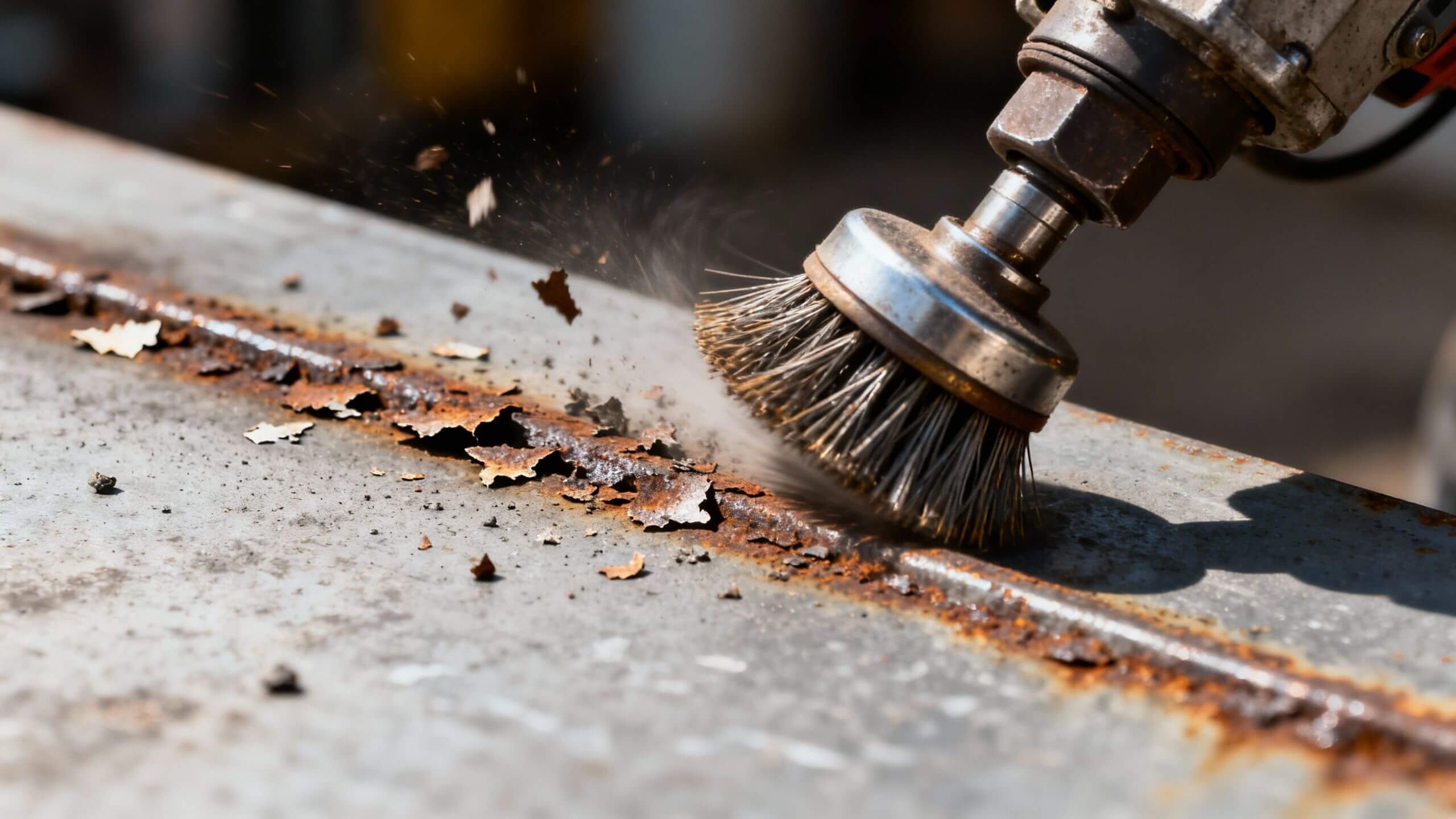
Mechanical abrasion provides controlled surface preparation where structural steel remains fundamentally sound. The method removes light corrosion, surface oxidation and degraded coatings without excessive substrate loss, creating a suitable profile for compliant primer and intumescent fire-protection systems.
When Mechanical Abrasion Is the Right Choice

Targeted Preparation Without Full Blasting

Mechanical abrasion is specified where existing steelwork has sound coatings in place, light corrosion is present, or preparation is limited to isolated areas. It allows localised treatment without the cost, disruption or programme impact of full abrasive blasting, while still meeting fire-protection performance requirements.

This method is commonly used during refurbishment works, phased upgrades and touch-up preparation.
Equipment Used for Controlled Preparation

Tools Selected for Precision and Control

Mechanical abrasion is carried out using hand-held and powered tools selected to suit the condition of the steel and extent of preparation required.
Dual-Action Sanders
Used to remove surface oxidation and aged coatings while maintaining controlled material removal and avoiding excessive steel loss.
Needle Scalers
Target corrosion pockets, weld areas and tight sections where precision is required and blasting access is limited.
Wire Wheels
Effective for cleaning edges, fixings and localised corrosion where a light but thorough preparation is needed.
Adhesion & Mechanical Key

Why Surface Profile Matters

Abrasive blasting creates a controlled surface profile that allows intumescent coatings to bond mechanically to the steel. This mechanical key prevents delamination under thermal stress and supports long-term system durability. Without the correct profile, coatings can fail prematurely regardless of product quality or applied thickness.
Preparation Methods

Surface Preparation Methods for Compliant Fire Protection

Every fire-protection system is only as reliable as the surface beneath it. We select the appropriate preparation method based on substrate condition, access constraints and specification requirements to ensure adhesion, durability and certified fire performance.
Request a Bid
01
Surface Profile & Adhesion
Creating the Right Roughness for Coating Performance
Mechanical abrasion produces a controlled surface roughness that allows primers and intumescent coatings to bond effectively. Surface profile must align with manufacturer requirements and relevant ISO standards to ensure adhesion, uniform coating build and reliable fire performance.
02
Spot Priming & Substrate Protection
Preventing Flash Rust on Prepared Steel
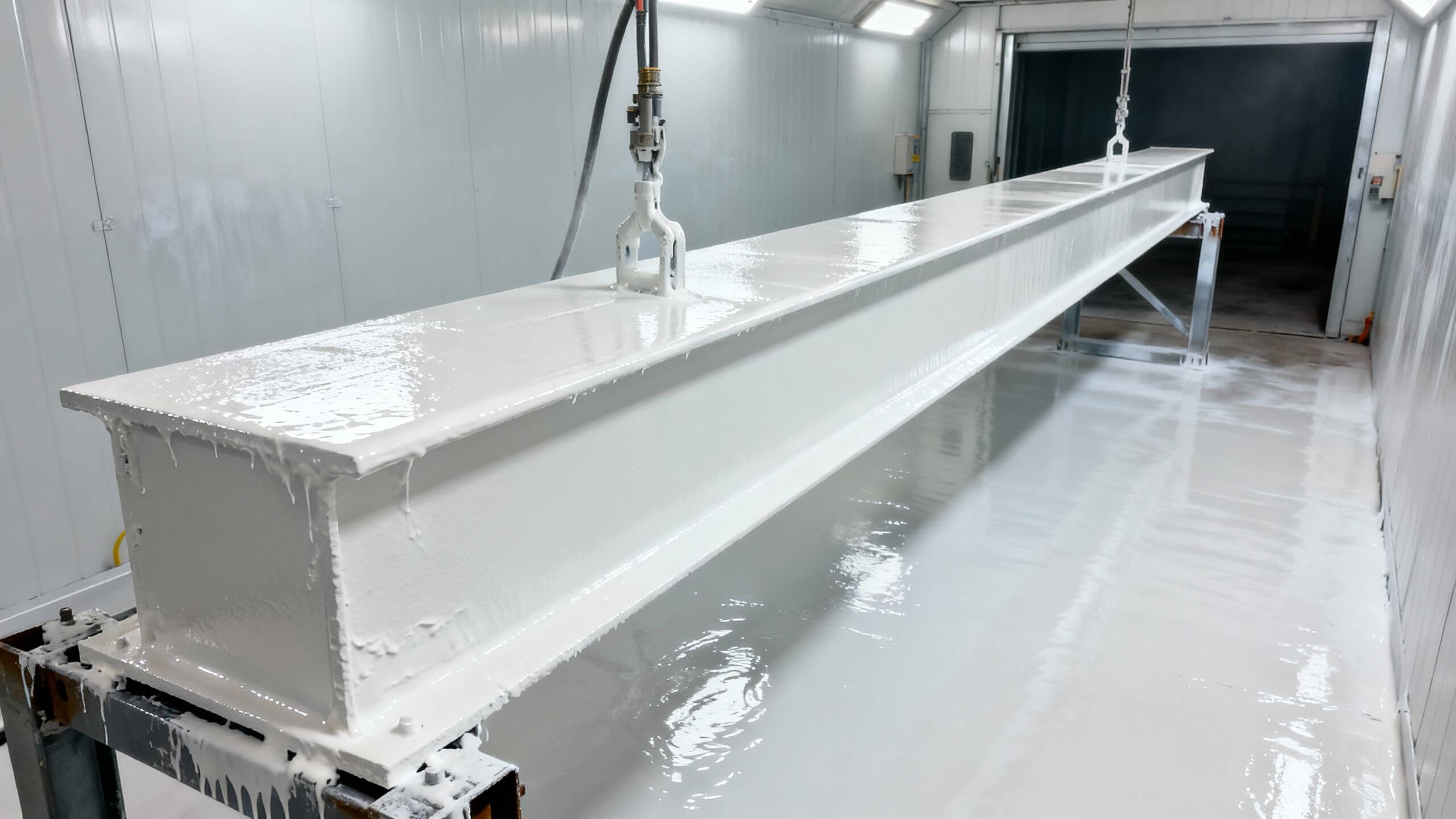
Following mechanical abrasion, exposed steel is immediately spot-primed to prevent flash rusting. This step stabilises the substrate, maintains surface integrity and ensures the steel remains receptive to subsequent intumescent coating application.

Spot priming is a critical control point within compliant fire-protection delivery.
03
Limitations of Mechanical Abrasion
Where Abrasion Alone Is Not Sufficient
Mechanical abrasion is not suitable for removing heavy mill scale, deep corrosion or widespread rust. Where these conditions are present, abrasive blasting to SA 2.5 or shot blasting is required to achieve the surface cleanliness necessary for compliant fire-protection systems.

Method selection is always determined by substrate condition and specification requirements.
04
Commercial Steelwork
Typical Applications on Commercial Steelwork
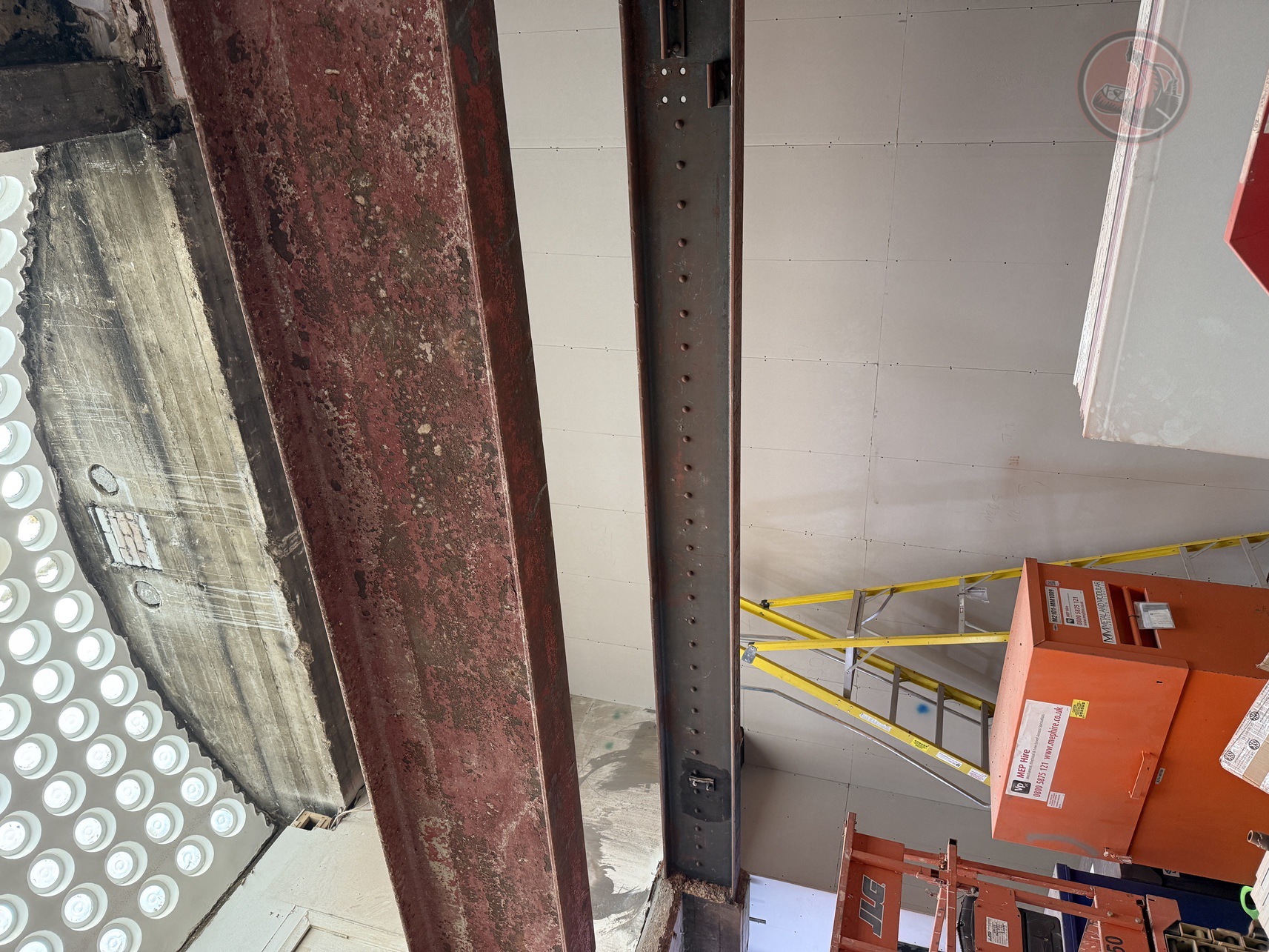
Mechanical abrasion is commonly used for edge preparation, bolt connections, welds, localised repairs and touch-up works. It is particularly effective where access restricts larger-scale blasting methods or where surrounding coatings must remain intact during preparation.
Standards & Specification Compliance

Method Selection Must Align With Fire-Rating Requirements

Mechanical abrasion must be specified and approved as part of the project fire-protection specification. Preparation methods must comply with manufacturer guidance, relevant standards and certification requirements to ensure the intumescent system performs as tested and approved.
From the founder

“FireCoatings exists to raise the standard of how structural steel fire protection is delivered, through technical control, clear communication and professional site practice. That commitment underpins every project we take on.”

Myles Howson
Managing Director
Testimonials
“Working with Foster & Reeves was a completely different experience from other contractors we’ve dealt with in the past. From day one, they took the time to understand our operational needs.”
Sarah Donovan
CEO, Harborview Development
Testimonials
“Working with Foster & Reeves was a completely different experience from other contractors we’ve dealt with in the past. From day one, they took the time to understand our operational needs.”
Sarah Donovan
CEO, Harborview Development