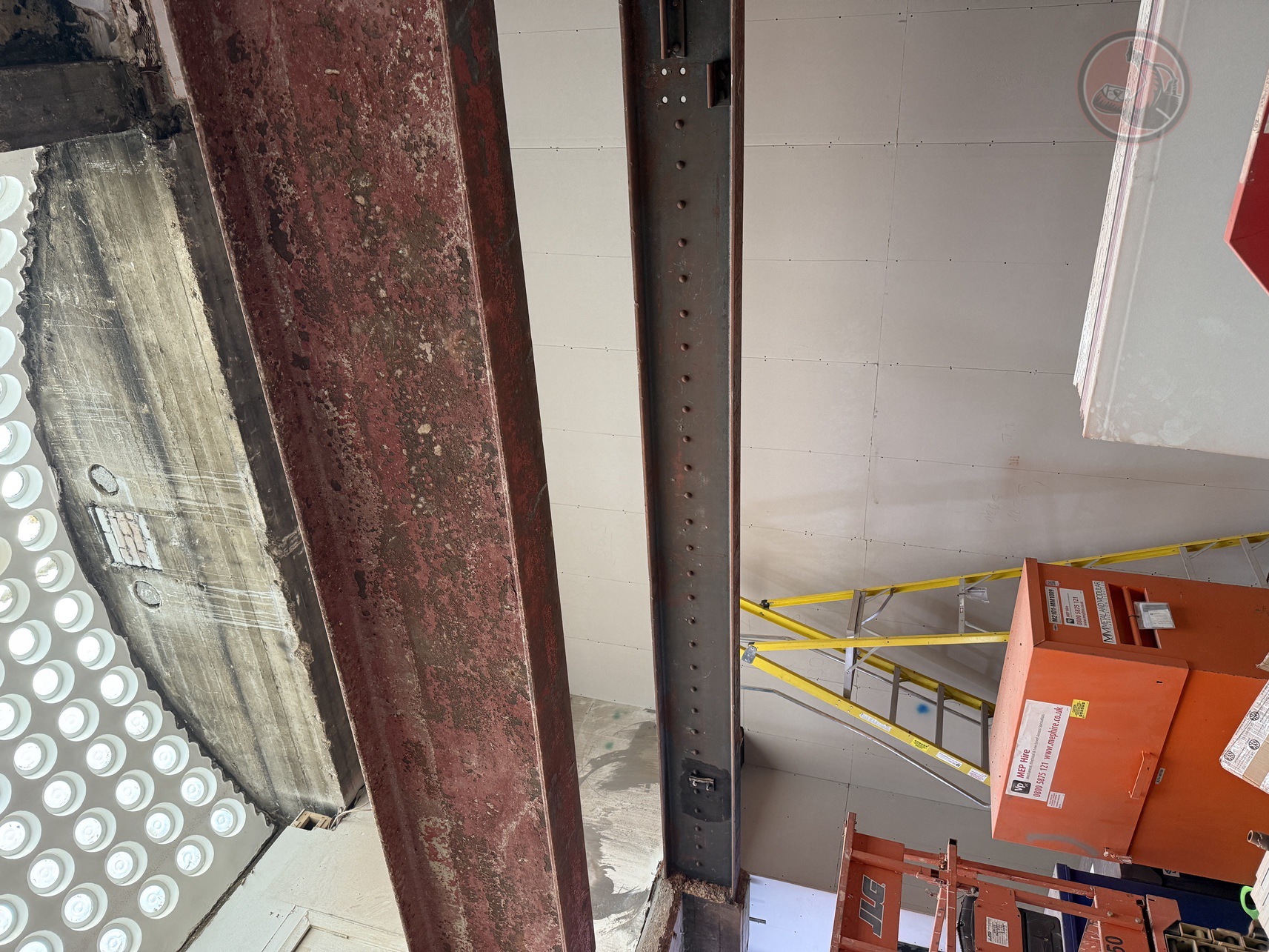
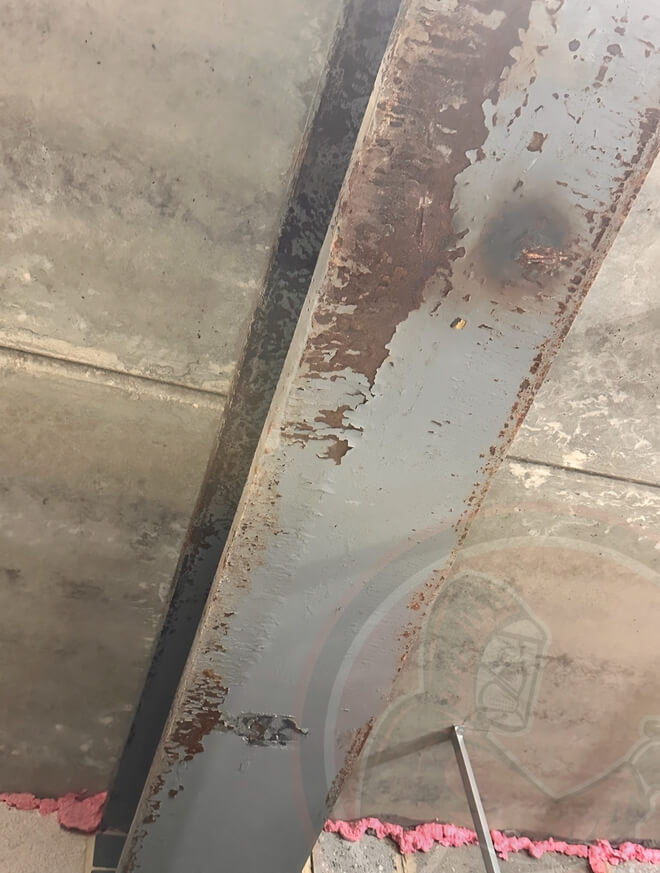
Dry Ice Blasting for Fire Protection

Dry ice blasting provides precision surface preparation where substrate preservation is critical. The process removes failing coatings, surface contamination and residues without abrasive damage, creating a clean substrate ready for compliant intumescent fire-protection systems.
Technology

Non-Abrasive CO₂ Pellet Cleaning

Dry ice blasting uses solid carbon dioxide (CO₂) pellets propelled at high velocity. On impact, the pellets sublimate from solid to gas, lifting contamination and failing coatings from the surface without abrasion. As the pellets fully evaporate, no secondary waste is generated and the underlying substrate remains intact.
  • Removes failing coatings, grease and surface contamination

  • Leaves no abrasive residue or secondary waste

  • Preserves steel and timber substrate integrity
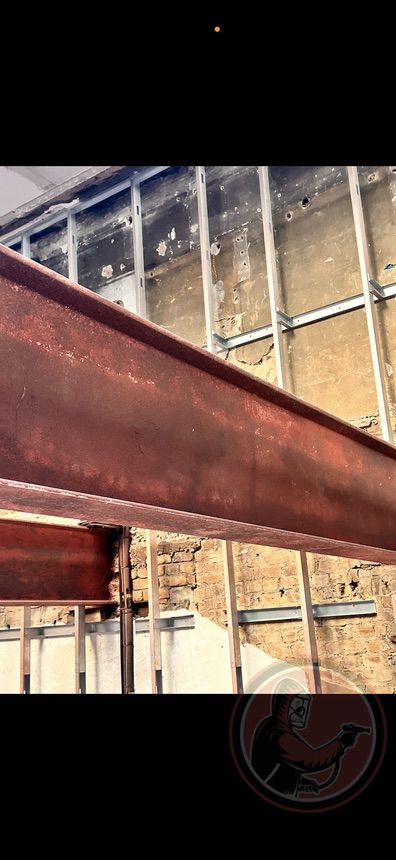
Method

When Dry Ice Blasting Is the Right Choice

Dry ice blasting is selected where existing coatings or contaminants must be removed without damaging the substrate. The process is particularly suited to steel or timber elements where coating adhesion and surface integrity are essential to fire-protection performance.

Ideal for Sensitive Substrates and Live Environments

Dry ice blasting is preferred where abrasive methods would be too aggressive, impractical or disruptive. It allows preparation works to be carried out with minimal dust, reduced waste handling and limited impact on surrounding areas, supporting efficient progression to coating application.
Preferred Over Abrasive Methods in Specific Scenarios
Dry ice blasting is preferred where abrasive methods would be too aggressive, impractical or disruptive. It allows preparation works to be carried out with minimal dust, reduced waste handling and limited impact on surrounding areas, supporting efficient progression to coating application.
Capability

Suitable Substrates and Key Advantages

Dry ice blasting is effective across a range of substrates commonly encountered in fire-protection projects, delivering both operational and compliance benefits.
Request a Bid
01
Substrates
Suitable for structural steel, timber elements and existing sound coatings, without accelerating corrosion or damaging the substrate surface.
02
Operational Benefits
CO₂ pellets sublimate on contact, eliminating secondary waste streams. The process generates minimal dust and disruption, allowing works to proceed efficiently and reducing downtime between preparation and coating application.
Limitations

Where Dry Ice Blasting Is Not Suitable

Dry ice blasting does not remove heavy corrosion, mill scale or deeply embedded contaminants. Where these conditions are present, abrasive blasting to SA 2.5 is required to achieve the surface cleanliness necessary for fire-protection system adhesion and long-term performance.
  • Heavy corrosion requires abrasive blasting to SA 2.5

  • Mill scale and deep rust cannot be removed by dry ice alone

  • Final preparation method is determined by site assessment

Shot Blasting
Adhesion & Fire-Protection Performance

Surface Preparation That Supports System Integrity

By removing failing coatings and surface contamination without leaving abrasive residue, dry ice blasting creates a clean substrate suitable for primer and intumescent application. Proper surface cleanliness supports adhesion between layers, allowing specified Wet Film Thickness to be achieved and verified in line with tested fire-performance requirements.
Quality Assurance

Verification of Surface Readiness

Following dry ice blasting, prepared surfaces are assessed to confirm suitability for coating application. Visual inspection and adhesion checks are carried out where required, with photographic records maintained as part of the project quality file. Surface preparation records form part of the compliance documentation issued at project completion.
From the founder

“FireCoatings exists to raise the standard of how structural steel fire protection is delivered, through technical control, clear communication and professional site practice. That commitment underpins every project we take on.”

Myles Howson
Managing Director
Testimonials
“Working with Foster & Reeves was a completely different experience from other contractors we’ve dealt with in the past. From day one, they took the time to understand our operational needs.”
Sarah Donovan
CEO, Harborview Development
Testimonials
“Working with Foster & Reeves was a completely different experience from other contractors we’ve dealt with in the past. From day one, they took the time to understand our operational needs.”
Sarah Donovan
CEO, Harborview Development