Dry-Ice Cleaning for Structural Steel

Dry-ice cleaning uses solid CO₂ pellets to remove selected contamination and weakly bonded residues without creating an abrasive surface profile. Suitability depends on the contaminant, coating adhesion, substrate and final condition required by the selected coating system.
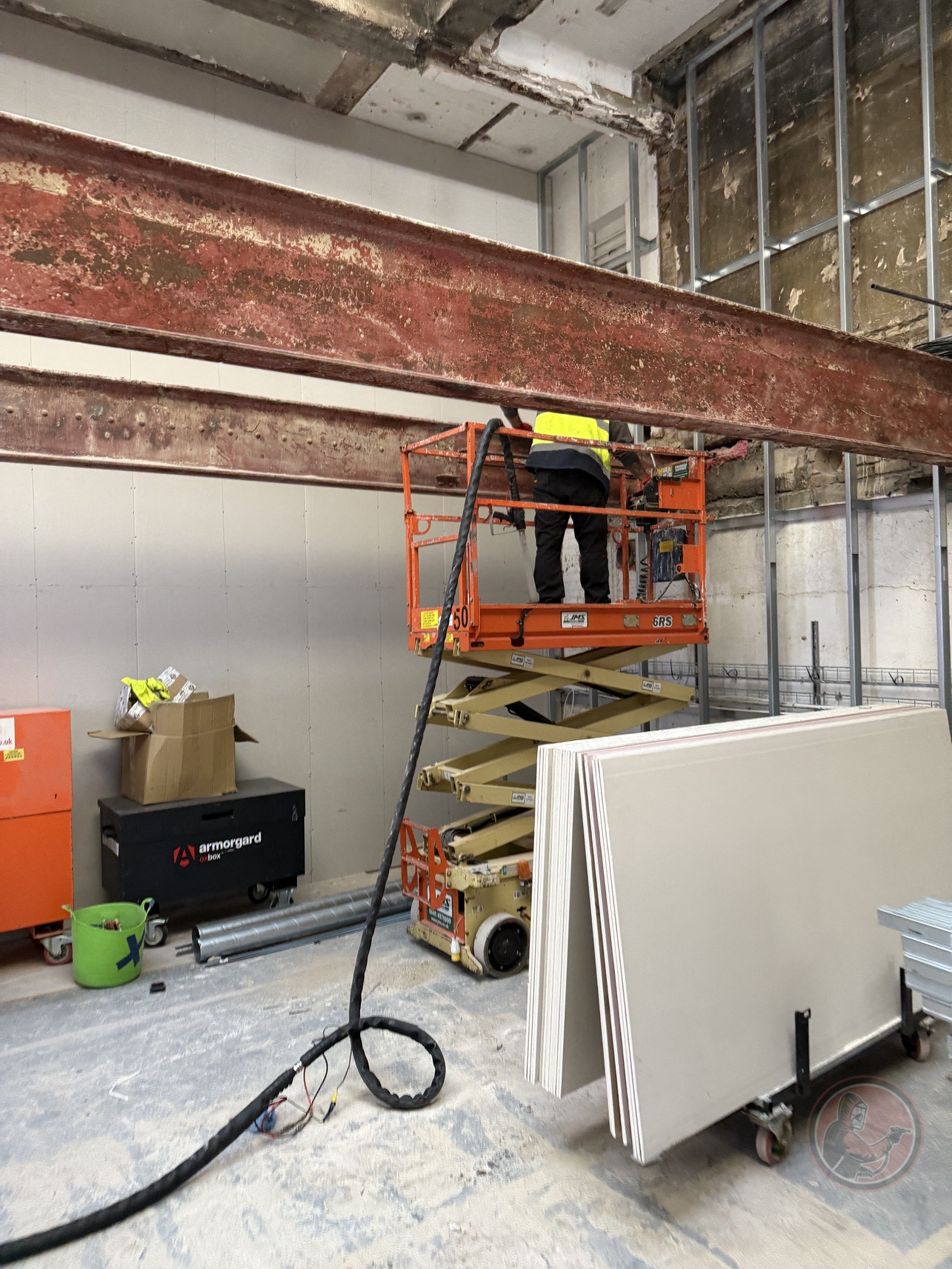
Worker in a high-visibility vest on an orange scissor lift cleaning large rusty steel beams inside a construction site.
The Process

Non-Abrasive CO₂ Cleaning

Solid CO₂ pellets are accelerated towards the surface and sublimate into gas on impact. The blast media leaves no grit or water behind, but removed contamination and coating debris remain and must be collected. The process does not create an anchor profile.
  • Can remove selected grease, residue and weakly bonded coating

  • Leaves no spent abrasive blasting media

  • Does not intentionally create an abrasive surface profile
Method Selection

When Dry-Ice Cleaning May Be Suitable

Dry-ice cleaning may be considered where selected contamination or weakly bonded material must be removed without abrasive profiling. A trial area can help establish whether it will achieve the required result on the particular coating and substrate.

Useful Where Spent Abrasive Media Is Undesirable

The process may reduce spent blast media and associated clean-up compared with conventional abrasive blasting. Containment, ventilation and collection of removed debris are still planned around the work area and identified contaminants.
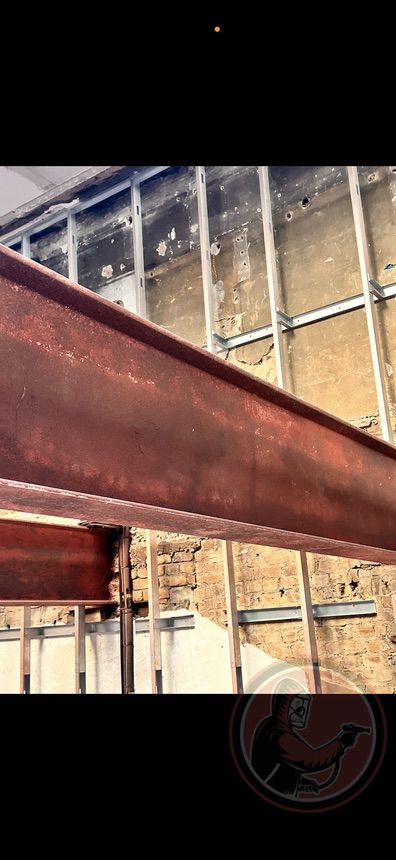
Close-up of a rusty steel beam in an unfinished construction site with metal studs and a weathered brick wall in the background.
Selection Depends on the Required Finish
Dry-ice cleaning does not replace abrasive blast-cleaning where the accepted specification requires bare steel, a defined anchor profile or removal of heavy corrosion and mill scale.
Rusty red steel beam above a cleaned steel beam in a construction area with yellow ladders and orange equipment.
Potential Applications

Potential Uses and Practical Benefits

Dry-ice cleaning can support selected refurbishment and maintenance scopes where low secondary media, targeted cleaning and preservation of the existing surface are important.
Request a Bid
01
Surface Suitability
Potentially suitable for structural steel and accepted existing coatings, subject to a trial, coating-system requirements and the condition required after cleaning.
02
Media, Waste and Ventilation
The CO₂ media sublimates, leaving no spent grit or water. Removed debris still requires collection, and ventilation or CO₂ controls may be necessary—particularly in enclosed, low-level or poorly ventilated areas.
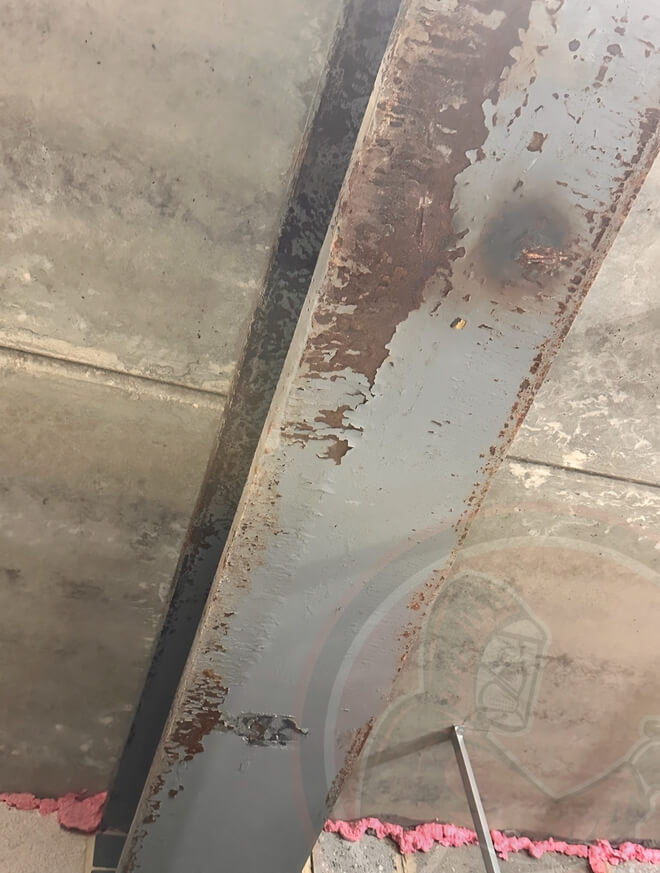
Rusty and peeling painted steel beam on a concrete ceiling with pink insulation visible at the bottom.
Limitations

Where Dry-Ice Cleaning Is Not Enough

Dry-ice cleaning does not create a surface profile and may not remove well-adhered coatings, mill scale, deeply embedded contamination or heavy and pitted corrosion. Where these conditions are present, an alternative or additional preparation method is agreed from the specification and system requirements.
  • Heavy or pitted corrosion usually requires a more aggressive preparation method

  • Dry ice alone does not create the profile produced by abrasive blasting

  • Final method is agreed from assessment, specification and product documentation
View Abrasive Blast-Cleaning
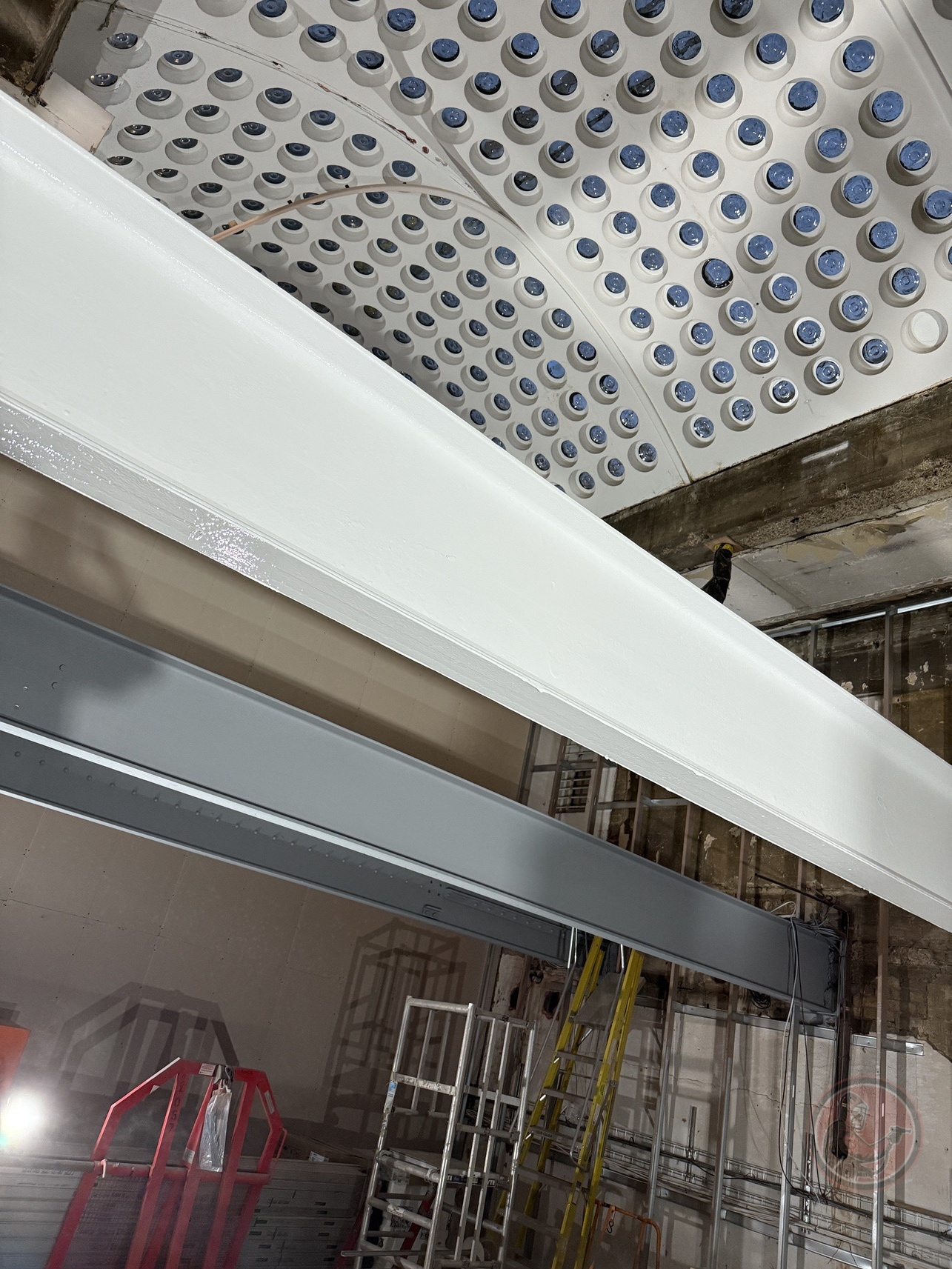
Construction site with a large white painted steel beam with intumescent coatings, a grey steel beam below it, and a ceiling with circular apertures containing blue lights.
Further Preparation

Cleaning That Supports Further Preparation

After dry-ice cleaning, the surface is inspected to determine whether further degreasing, mechanical preparation, abrasive blasting or priming is required. Cleaning acceptance is kept separate from the later WFT and DFT application checks.
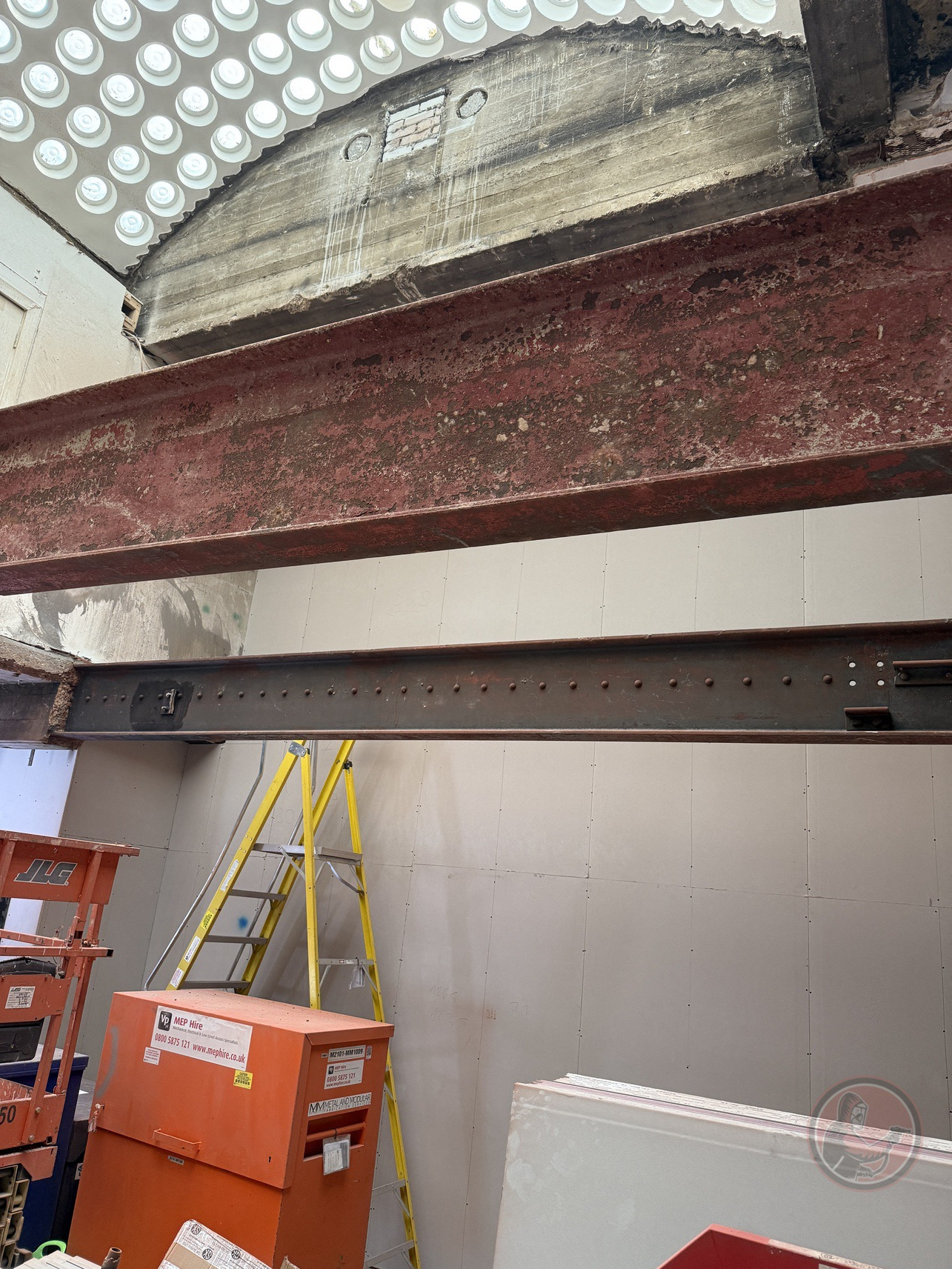
Indoor construction scene showing two steel beams, one old rusted and one painted, with a yellow ladder and orange equipment in front of a white paneled wall.
Inspection Records

Assessment of the Cleaned Surface

Cleaned areas are visually assessed, with trial results, adhesion checks, photographs or contamination checks recorded where included in the agreed QA plan. The records document the cleaning scope for project-team review; they do not independently certify the complete coating system.
From the Founder

“After a decade in the protective coatings industry, I built FireCoatings to deliver fire protection without unnecessary noise — just clear documentation, a controlled application process, and professional site practice.”

Myles Howson
Managing Director
Client Feedback
"Thank you Myles and team for all your hard work on this one. It wasn't easy working around the schedule but you got it done without causing any further issues. It was a pleasure to work with you."
Chris
Project Manager, Millcroft Services
Interior view of a construction site featuring steel beams and columns painted with white protective coating and temporary support props.
Client Feedback
"NuColour worked efficiently around our programme and delivered on time at late notice. The team were organised, flexible, and professional throughout the works."
Ciprian
Site Manager, Principal Contractor – GEMCO
Close-up of a bright yellow structural steel column with rivets installed on a construction site indoors.