Mechanical Preparation for Structural Steel

Targeted Hand and Power-Tool Preparation

Mechanical preparation uses hand and power tools to treat selected corrosion, loose coating, edges, connections and local repair areas. It is suitable only where the accepted specification and selected coating system permit it.
Man wearing a white protective suit, gray cap, and yellow safety vest taking a selfie in a bathroom mirror with partial text 'Safety starts with' visible.
When Mechanical Preparation May Be Suitable

Targeted Preparation Where Full Blasting Is Unnecessary

Mechanical preparation may suit localised corrosion, edges, connections, repairs or accepted existing coatings that require a mechanical key. It does not replace abrasive blasting where a specified blast grade or profile is required.

Typical applications include refurbishment work, phased upgrades, local repairs and preparation of defined touch-up areas.
Equipment Used for Controlled Preparation

Tools Selected for the Surface and Work Area

Hand and power tools are selected according to the steel condition, existing coating, required finish, access and project RAMS. Dust, noise and vibration controls are included where relevant.
Sanders and Abrasive Discs
Used for controlled removal or roughening of selected coatings and light oxidation where the accepted method permits it. Abrasive grade and extraction are chosen for the task.
Needle Scalers
Can remove loose scale and corrosion around welds, irregular areas and restricted details, subject to noise, vibration and substrate-condition controls.
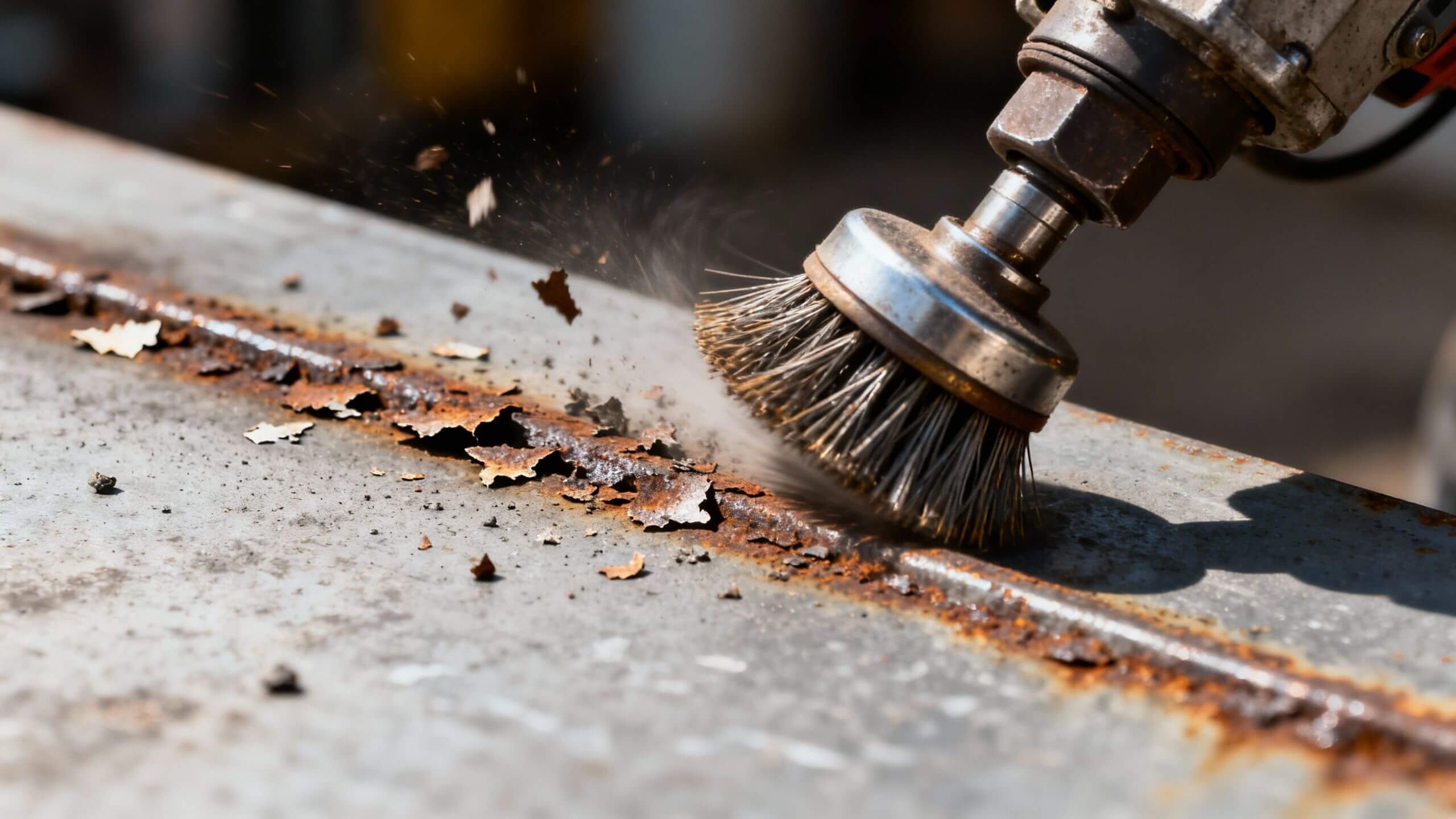
Wire Brushes and Wire Wheels
Used for selected loose rust, edges and local details. They do not reproduce an abrasive blast profile and can polish or smear contamination if used incorrectly.
Close-up of metal surface showing rust on left side and clean polished area on right side.
Prepared Surface

Mechanical Preparation Produces a Different Finish

Hand and power-tool preparation does not reproduce the profile created by abrasive blasting. The required preparation grade or surface finish must therefore be defined by the accepted specification, product documentation or repair procedure.
Mechanical-Preparation Process

Mechanical Preparation Within the Coating System

The method is agreed from substrate condition, access, existing coatings, selected product documentation and the accepted project requirements. Prepared areas are checked before primer or coating application.
Discuss Preparation Requirements
01
Localised Cleaning and Surface Key
Creating the Accepted Finish for the Repair Area
Mechanical tools remove specified loose material and produce the finish required for the defined area. Acceptance is based on the project specification, selected product documentation or agreed repair procedure.
02
Priming of Exposed Steel
Protecting Prepared Areas Before Recontamination
Where the selected system requires it, exposed steel is primed with the accepted compatible primer within the permitted interval after preparation. Timing depends on product requirements and observed site conditions.

Primer identity, batch and application information are recorded where included in the agreed QA plan.
03
Limitations of Mechanical Preparation
When a More Thorough Method Is Required
Mechanical preparation may be unsuitable for heavy mill scale, deep or widespread corrosion, extensive coating removal or work requiring a specified blast profile. In those cases, abrasive blasting or further technical assessment may be required.

The final method is agreed from substrate condition, accepted specification, access and selected system documentation.
04
Typical Work Areas
Local Details, Repairs and Restricted Access
Typical areas include edges, bolt heads, connections, welds, local repairs and restricted locations where larger blasting equipment is impractical. Existing surrounding coatings are protected where they are accepted to remain.
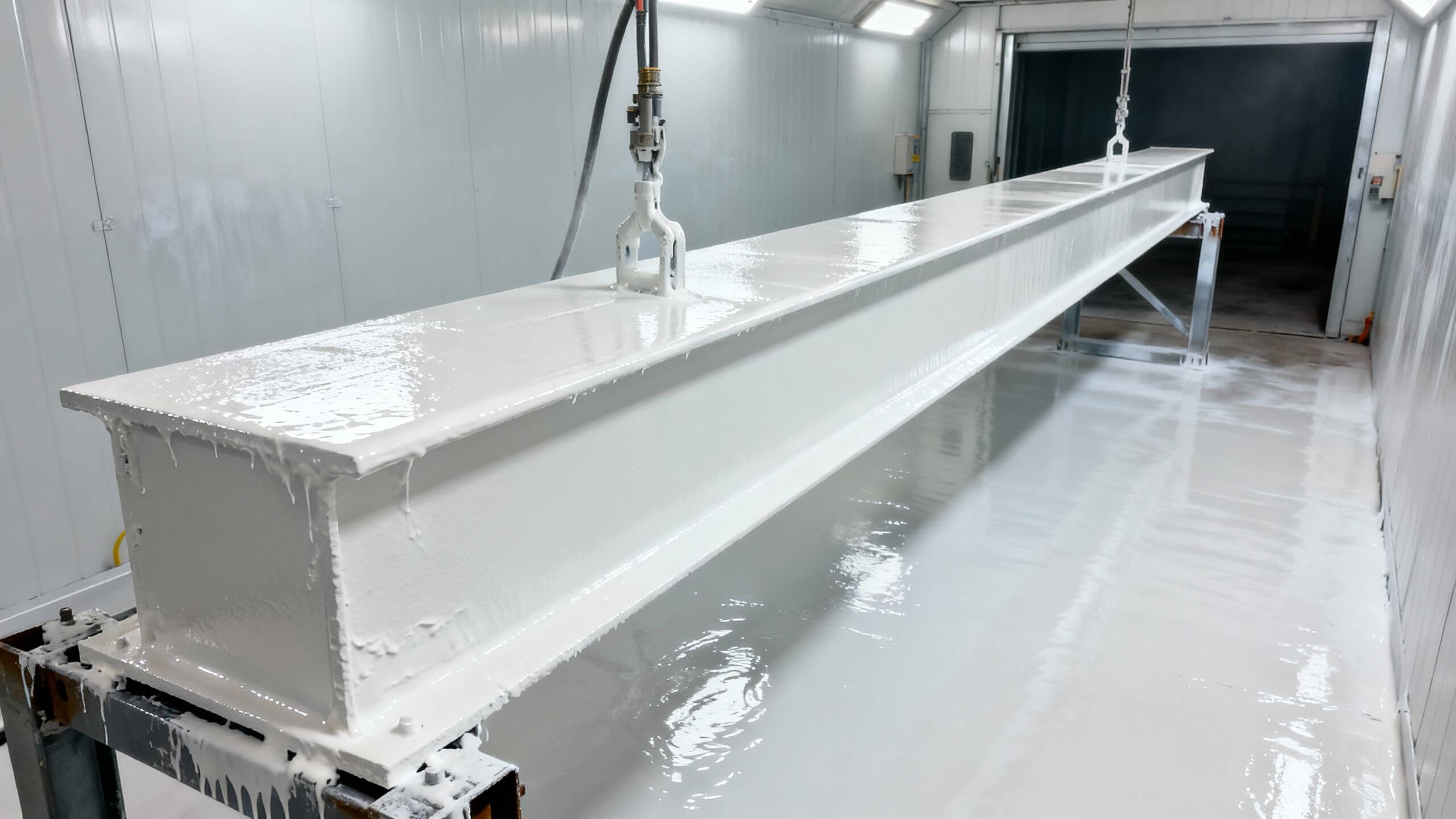
Long steel beam coated with wet white intumescent paint hanging in a spray booth.
Method and Acceptance Requirements

The Preparation Grade Must Be Agreed

Mechanical preparation may be defined by a written preparation grade, product requirement or manufacturer repair procedure. We work to the accepted scope and record the prepared areas, method and agreed checks for project-team review.
From the Founder

“After a decade in the protective coatings industry, I built FireCoatings to deliver fire protection without unnecessary noise — just clear documentation, a controlled application process, and professional site practice.”

Myles Howson
Managing Director
Client Feedback
"Thank you Myles and team for all your hard work on this one. It wasn't easy working around the schedule but you got it done without causing any further issues. It was a pleasure to work with you."
Chris
Project Manager, Millcroft Services
Interior view of a construction site featuring steel beams and columns painted with white protective coating and temporary support props.
Client Feedback
"NuColour worked efficiently around our programme and delivered on time at late notice. The team were organised, flexible, and professional throughout the works."
Ciprian
Site Manager, Principal Contractor – GEMCO
Close-up of a bright yellow structural steel column with rivets installed on a construction site indoors.